
Marketing today is no longer about sending the same message to everyone and hoping someone responds. Customers interact with brands through websites, emails, social media, search engines, forms, and many other channels. Managing all these interactions manually can quickly become time-consuming and difficult.
This is where marketing automation software becomes useful. A good marketing automation platform can handle repetitive marketing tasks, organize customer information, personalize communication, and help businesses understand what is actually working.
However, not every automation tool offers the same experience. Some focus mainly on email marketing, while others provide a complete system for lead management, analytics, customer journeys, and campaign automation.
So, what should you look for when choosing marketing automation software? Let’s explore the essential features that can make a platform genuinely useful for a modern marketing team.
1. Easy-to-Use Automation Workflows
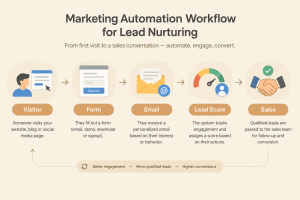
Automation is the main reason businesses invest in marketing automation software, so creating workflows should not feel like a technical project.
A good platform should allow marketers to create workflows using simple visual builders. For example, when someone fills out a form, the system could automatically send a welcome email. If the person opens the email, they could receive another message after a few days. If they do not engage, the system could place them into a different communication path.
The best workflow tools make these processes easy to build, edit, test, and monitor without requiring advanced coding knowledge.
2. Lead Management and Scoring
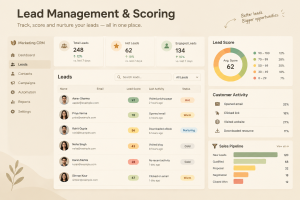
Not every lead is equally interested in buying. Some visitors may only be researching, while others may be ready to speak with a sales representative.
Marketing automation software should help businesses identify these differences through lead scoring. The system can assign scores based on actions such as opening emails, visiting important pages, downloading resources, or submitting forms.
This helps marketing and sales teams focus their attention on leads that show stronger engagement rather than treating every contact the same way.
3. Email Marketing and Personalization
Email remains an important part of digital marketing, but sending generic emails to an entire database is rarely enough.
A capable automation platform should provide email templates, segmentation, scheduling, A/B testing, personalization, and automated follow-ups. Personalization can go beyond simply adding a customer’s name. Content can be adjusted based on interests, previous interactions, location, or stage in the customer journey.
For example, a new subscriber might receive educational content, while an existing customer could receive product updates or relevant offers.
4. Audience Segmentation
Different customers have different needs, so marketers need a way to divide their audience into meaningful groups.
A good marketing automation platform should allow segmentation using factors such as demographics, behavior, purchase history, engagement level, interests, and website activity.
Instead of sending one campaign to everyone, marketers can create targeted campaigns for specific groups. This usually makes communication more relevant and gives customers a better experience.
5. CRM Integration
Marketing does not work in isolation from sales and customer service. If customer information is scattered across different systems, teams can struggle to understand the complete customer journey.
That is why CRM integration is an important feature. Marketing automation software should connect smoothly with CRM platforms so that leads, customer information, interactions, and campaign data can move between teams.
When marketing and sales have access to consistent information, it becomes easier to follow up with prospects and understand how marketing activities contribute to business results.
6. Multi-Channel Campaign Management
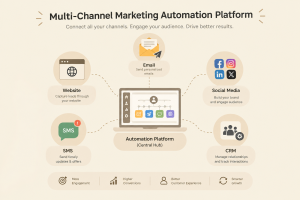
Customers rarely communicate with a brand through just one channel. Someone might discover a company through social media, visit its website, subscribe to an email list, and later interact with a sales representative.
Modern marketing automation software should support multiple channels where appropriate. Depending on the platform, this may include email, social media, SMS, web forms, landing pages, and other communication channels.
Managing different touchpoints from one system can make campaigns more organized and reduce the amount of manual work involved.
7. Landing Pages and Forms
Forms and landing pages are often the starting point for lead generation. A visitor may exchange their contact information for an ebook, webinar registration, free trial, consultation, or another resource.
A good automation platform should make it easy to create landing pages and forms without requiring a developer for every small change.
It should also connect these forms directly with automation workflows. Once someone submits a form, their information can be stored, segmented, and used to trigger a relevant follow-up automatically.
8. Analytics and Reporting
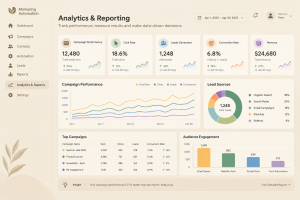
Automation without measurement is difficult to improve.
Strong reporting features help marketers understand how campaigns are performing. Important metrics may include email open rates, click-through rates, conversions, website activity, lead sources, engagement, and revenue-related results.
The software should present this information in a clear way rather than overwhelming users with unnecessary data.
Custom dashboards and reports can be especially useful because different teams may care about different metrics. Marketing managers may focus on campaign performance, while business leaders may want to understand the overall return generated by marketing activities.
9. A/B Testing
Even experienced marketers cannot predict exactly which message, subject line, design, or call-to-action will perform best.
A/B testing allows marketers to compare different versions of a campaign element. For example, two email subject lines can be tested to see which generates more engagement.
A good automation platform should make testing straightforward and provide enough data to help marketers make informed decisions. Over time, these small improvements can contribute to better campaign performance.
10. Customer Journey Mapping
Modern marketing is increasingly focused on the complete customer journey rather than individual campaigns.
Customer journey features allow marketers to visualize how people move from their first interaction with a brand to becoming a lead, customer, and potentially a repeat buyer.
For example, a journey could include an advertisement, landing page visit, email subscription, educational emails, sales follow-up, and post-purchase communication.
Having this journey visible in one place helps marketers identify gaps and create more consistent experiences.
11. Integrations With Other Tools
Businesses often use several digital tools at the same time. Marketing automation software should therefore work well with other platforms.
Useful integrations may include CRM systems, analytics tools, ecommerce platforms, customer support software, advertising platforms, payment systems, and productivity tools.
Strong integrations reduce the need to manually transfer information between systems and can help create a more connected marketing workflow.
12. Scalability and Security
A platform that works for a small business should ideally be capable of growing with that business.
As the number of contacts, campaigns, users, and data increases, the software should continue to provide reliable performance. Flexible plans and features can also help businesses avoid switching platforms every time their marketing needs change.
Security is equally important. Marketing platforms often store customer names, email addresses, activity data, and other business information. Features such as access controls, secure data handling, user permissions, and privacy-supporting tools should therefore be considered before choosing a platform.
How to Choose the Right Marketing Automation Software
The right software depends on your business rather than simply the number of features available.
Start by identifying your biggest marketing challenges. If your team mainly needs automated email campaigns, a simple platform may be enough. If you manage complex customer journeys, multiple channels, and a large sales pipeline, you may need a more comprehensive solution.
It is also worth checking the platform’s ease of use, integrations, reporting capabilities, pricing structure, customer support, and scalability. A tool with hundreds of features is not necessarily useful if your team finds it difficult to operate.
Before making a decision, consider testing the platform through a trial or demo. This gives your team an opportunity to see whether the workflow, interface, and automation capabilities actually fit your daily processes.
Conclusion
Good marketing automation software should do more than automate repetitive tasks. It should help marketers understand their audience, deliver relevant communication, manage leads, connect marketing with sales, and measure campaign performance.
Features such as workflow automation, lead scoring, email personalization, segmentation, CRM integration, analytics, A/B testing, customer journey mapping, and strong integrations can make a major difference.
The most suitable platform is ultimately the one that fits your business goals, team capabilities, customer journey, and budget. Instead of choosing software simply because it has a long feature list, focus on whether those features can solve real marketing problems and make your team’s everyday work easier.
FAQs
1. What is marketing automation software?
Marketing automation software helps businesses automate repetitive marketing activities such as email campaigns, lead nurturing, audience segmentation, follow-ups, and campaign tracking. It allows marketers to manage these activities more efficiently while maintaining personalized communication.
2. What is the most important feature of marketing automation software?
There is no single feature that is equally important for every business. However, workflow automation, lead management, personalization, analytics, and CRM integration are commonly important because they connect different parts of the marketing process.
3. Can small businesses use marketing automation software?
Yes. Small businesses can use automation to save time and manage marketing activities with fewer manual tasks. The key is to choose a platform that matches the company’s current needs and can scale as those needs grow.
4. How does marketing automation improve lead management?
Automation can track customer interactions and assign leads to different segments or scores based on their behavior. This helps marketing and sales teams identify which prospects may need more attention and which communication should happen next.
5. Is CRM integration necessary for marketing automation?
CRM integration can be very useful because it helps marketing and sales teams share customer and lead information. It can reduce data duplication and provide a clearer view of interactions throughout the customer journey.
6. Does marketing automation replace marketers?
No. Automation handles repetitive processes, but marketers still need to develop strategies, create useful content, understand customers, analyze results, and make decisions. Automation works best as a tool that supports marketers rather than replacing them.